
Table of Contents
- Why Would a Tooth Need a Crown in the First Place?
- What Goes Into the Price of a Dental Crown?
- How Does the Crown Material Change the Cost?
- Why Can One Dental Crown Cost More Than Another?
- How Does Dental Insurance Handle Crowns?
- What Are the Options Without Dental Insurance?
- Frequently Asked Questions
- Where the Money Goes
A crown’s price depends on the tooth, the material and the work the tooth needs first.
Did a dentist just tell you a tooth needs a crown? The next question is usually about price, and dental crown cost covers more than the cap itself. A dental crown is a custom cover that fits over a weak, cracked or heavily filled tooth to bring back its shape and strength.
The estimate reflects the material, the lab work and any repair the tooth needs first. Insurance, financing and membership plans then change what you pay out of pocket.
Quick Answer
Dental crowns at Canyon Country Dental Care typically range from $500 to $2,000 per tooth, depending on the material, the number of crowns, and whether the tooth needs a build-up first. Insurance, CareCredit financing and an in-house membership plan can lower the amount you pay or spread it out.
Key Takeaways
- Crowns at this office typically range from $500 to $2,000 per tooth, depending on the details.
- Porcelain, ceramic, gold and blended crowns each suit different teeth and affect the final price.
- A tooth needing a build-up or root canal first adds steps and cost to treatment.
- Dental plans often class crowns as major services, which carry lower coverage than cleanings.
- An itemized treatment plan shows each fee, the estimated insurance benefits and your remaining balance.
Why Would a Tooth Need a Crown in the First Place?
A crown protects a tooth that can no longer hold together well on its own. According to the American Dental Association, crowns strengthen teeth with large fillings, protect weak teeth from breaking, restore broken teeth and cover dental implants. They also hold bridges in place.
Common reasons include a cracked molar, a tooth that’s brittle after a root canal, and an old filling that now covers most of the tooth.
What Goes Into the Price of a Dental Crown?
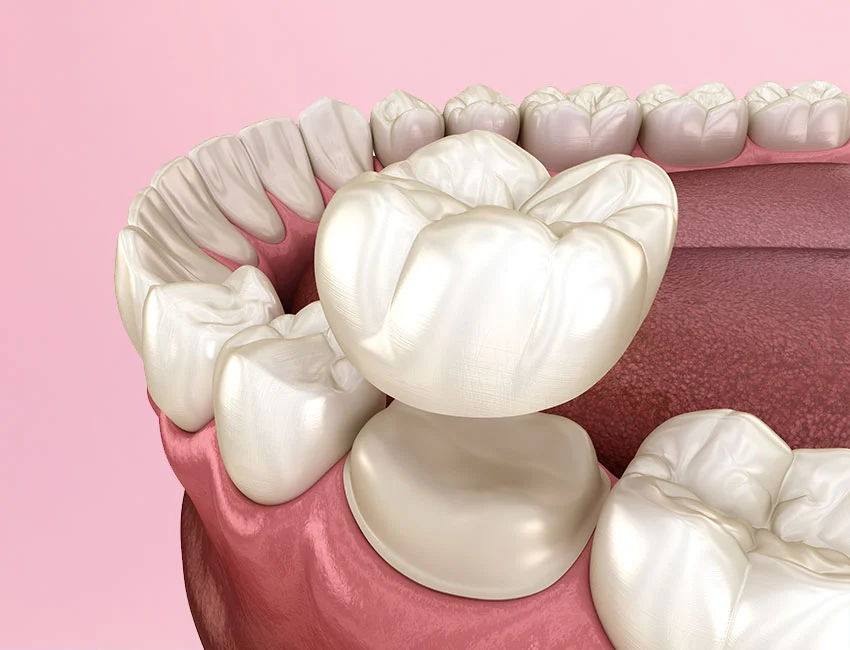
The fee covers two appointments and the custom work between them. At the first visit, the dentist numbs the tooth, shapes it and takes an impression. A dental lab uses that impression to build a crown that matches your bite and the shade of the teeth beside it.
You wear a temporary crown while the lab works. At the second visit, the dentist checks the fit and color of the permanent crown and cements it in place.
How Does the Crown Material Change the Cost?
The material is a main factor in what a crown costs. Common options include porcelain, ceramic, gold and blended crowns that combine porcelain with a metal base.
The dentist recommends a material based on where the tooth sits. Front teeth show every time you smile, so porcelain or ceramic is the usual choice for its natural color. Back teeth take heavy chewing force, which is why gold or a blended crown can make sense there.
Why Can One Dental Crown Cost More Than Another?
The condition of the tooth under the crown changes the price. When decay or a break has removed a lot of tooth structure, the dentist adds a build-up of filling material first so the crown has something solid to hold.
A tooth with an infected nerve needs a root canal before its crown, and that treatment carries its own fee. The number of crowns matters as well. Each crown is priced per tooth, so a plan with two or three crowns adds up quickly.
How Does Dental Insurance Handle Crowns?
Dental plans usually treat a crown as a major service, which means they cover a smaller share than they do for cleanings and exams. Coverage for major work can drop to around 50 percent, depending on the plan.
Every plan also has a deductible and a yearly maximum, and a crown can use up a large part of that maximum. Out-of-network patients can usually still use their benefits and pay the difference.
What Are the Options Without Dental Insurance?
People without insurance still have ways to bring the cost down or spread it out. The office’s in-house membership plan takes 25 percent off dental services, with no waiting period.
CareCredit and in-office payment plans split treatment into monthly payments, with low and 0 percent interest options. HSA and FSA funds can pay for crowns too.
Frequently Asked Questions
How long does a dental crown last?
A well-maintained crown lasts at least 10 to 15 years, and some last 20 years or more with good home care. Brushing twice a day and flossing around the crown daily protect the edges where decay can start.
How much does it cost to replace a dental crown?
The estimate for a replacement covers removing the old crown, making a new one and treating anything found underneath. When decay has formed under the old crown, the dentist cleans it out and may add a build-up before the new crown goes on.
Does getting a dental crown hurt?
Getting a crown feels a lot like getting a filling, because the dentist numbs the tooth before any shaping starts. Sedation is available on request, and some soreness in the jaw or at the injection site is normal afterward.
Where the Money Goes
The price of a dental crown pays for a custom restoration made to fit one tooth for years. The material, the shape the tooth is in, and your coverage decide where your number lands within the range. A clear, itemized estimate shows each of those pieces, so you can see the full cost before treatment starts.
Related Reading
- Dental Crown vs. Filling: Which One Does Your Tooth Actually Need?
- Root Canal Treatment Explained: Dentist Dispels Fears with Facts
About the Author
Dr. Ali Dabirian, DDS, graduated from NYU College of Dentistry and practices dentistry at Canyon Country Dental Care. He is a member of the American Dental Association, California Dental Association and Academy of General Dentistry.
- If you want to learn more about dental crown costs, visit our Dental Crowns in Canyon Country, CA page or schedule a consultation.