
Table of Contents
- Why Does the Jawbone Shrink After a Tooth Comes Out?
- How Does a Socket Graft Work?
- When Do Dentists Recommend a Bone Graft After Tooth Extraction?
- When Can an Extraction Heal Without a Graft?
- What Is the Grafting Material Made Of?
- What Is Healing Like After a Bone Graft?
- Frequently Asked Questions
- Saving Space for What Comes Next
A socket graft protects the jawbone after a tooth comes out, especially before an implant.
Was a bone graft added to your extraction plan, and now you’re wondering if it’s really needed? A bone graft after tooth extraction is grafting material placed into the empty socket to keep the jawbone from shrinking while it heals. This kind of dental bone grafting is often called socket preservation.
The answer depends on which tooth is coming out and what will replace it.
Quick Answer
A bone graft after a tooth extraction is usually recommended when the tooth will be replaced with an implant, bridge or denture, because the jawbone shrinks once the root is gone. Grafts are usually unnecessary after wisdom tooth or baby tooth removal. The dentist decides based on X-rays, the socket and the replacement plan.
Key Takeaways
- The jawbone around an empty socket starts to shrink once the tooth root is gone.
- A socket graft holds that space so new bone can grow in as the area heals.
- Grafts matter most when an implant, bridge or denture will replace the missing tooth.
- Wisdom teeth and baby teeth usually come out without any need for a bone graft.
- Most grafts go in during the same visit as the extraction, under the same numbing.
Why Does the Jawbone Shrink After a Tooth Comes Out?
Bone stays strong when it has work to do, and a tooth root gives it that work every time you chew. Once the root is gone, the body starts to break down the bone that used to hold it.
The ridge of bone where the tooth stood gets narrower and shorter as months pass. That change can leave too little bone to hold an implant, and it can change how a bridge or denture fits over the area.
How Does a Socket Graft Work?
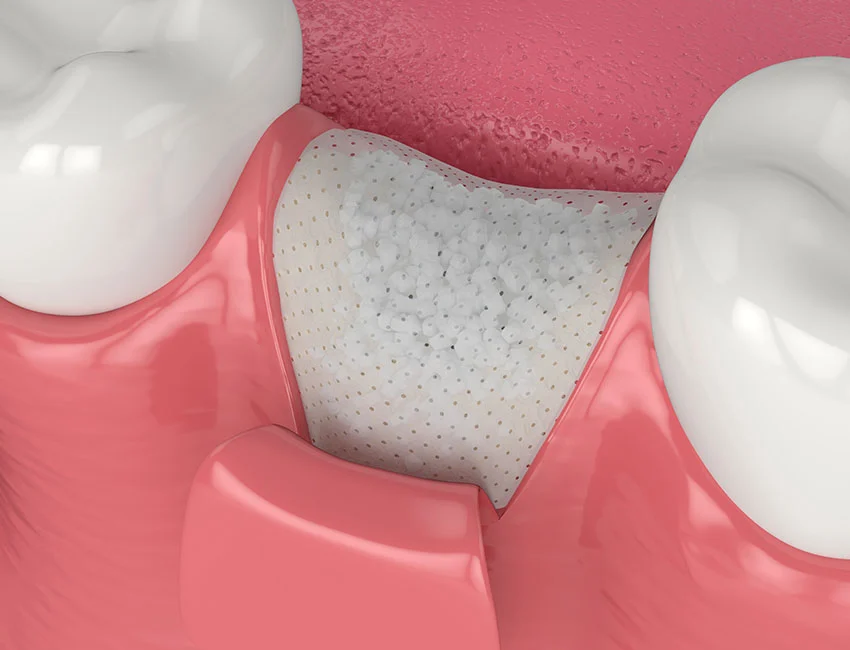
The graft acts as a scaffold inside the empty socket. Right after the tooth comes out, the dentist packs grafting material into the socket and closes the gum over it.
Over the next few months, the body grows its own bone into and around that material. The result is a fuller, sturdier ridge that’s ready for whatever replaces the tooth. Antibiotics may be prescribed afterward to help the site heal cleanly.
When Do Dentists Recommend a Bone Graft After Tooth Extraction?
A graft is most often recommended when the missing tooth will be replaced. An implant needs enough bone height and width to hold a post, and a graft protects that bone from the start.
It also helps when a bridge or denture is planned, since a fuller ridge gives those teeth a better fit and a more natural look. Infection or gum disease that has already eaten away bone around the tooth is another common reason. Grafting at the time of extraction often saves a larger procedure later.
When Can an Extraction Heal Without a Graft?
Many extractions heal well without grafting. Wisdom teeth sit at the very back of the mouth and usually aren’t replaced, so grafting their sockets is rarely part of the plan.
Baby teeth skip grafting too, since an adult tooth grows into the space. For other teeth, the dentist looks at the X-rays and the shape of the socket, along with whether a replacement is planned.
What Is the Grafting Material Made Of?
Grafting material comes from one of four sources. An autograft uses a small amount of your own bone, and an allograft uses donor bone from a tissue bank.
A synthetic graft is made from lab-made material and is a very popular choice. A xenograft uses specially processed animal bone. The choice depends on the size of the socket and the plan for that spot.
What Is Healing Like After a Bone Graft?
The first stretch of healing feels much like any extraction. According to Cleveland Clinic, initial recovery takes about a week, while the graft itself needs at least three months to heal.
Some tenderness and swelling are normal at first. Cleveland Clinic also notes that a few sand-like grains can come out of the site in the first few days, which is usually no cause for concern. Leave the area undisturbed, avoid spitting hard or smoking, and call the office about pain or swelling that gets worse after the first week, or any pus.
Frequently Asked Questions
Can you get a bone graft years after a tooth extraction?
Yes, a dentist can rebuild a ridge that has shrunk years after an extraction. This later grafting tends to be a bigger procedure than a socket graft because more bone needs replacing.
Do you need a bone graft after wisdom tooth extraction?
Wisdom tooth extractions usually heal well without a bone graft. These teeth sit at the back of the mouth and are rarely replaced, so preserving bone for an implant isn’t a concern.
Does a dental bone graft hurt?
The area is numbed before the graft goes in, and Cleveland Clinic reports that most people feel little to no pain. Tenderness, swelling and bruising afterward are normal and usually fade within a week or two.
Saving Space for What Comes Next
A bone graft after an extraction protects the jawbone for the tooth that will take its place. Dental bone grafting is most useful before an implant, bridge or denture, and it’s usually skipped for wisdom teeth and baby teeth. Placing the graft on extraction day keeps the bone strong while the new plan takes shape.
Related Reading
About the Author
Dr. Ali Dabirian, DDS, graduated from NYU College of Dentistry and practices dentistry at Canyon Country Dental Care. He is a member of the American Dental Association, California Dental Association and Academy of General Dentistry.
- If you want to learn more about bone grafts after an extraction, visit our Bone Grafting in Canyon Country, CA page or schedule a consultation.